Leak Detection for Any Hidden Leak in Your Home
Fig. 01 — Recent work

Leak Detection for Any Hidden Leak in Your Home

4.9 · 309 Google reviews Licensed & insured · CA Lic. #997050

Request an estimate

No obligation · Responds within 1 business day

Overview

Why Homeowners Choose Graham Plumbing and Drain Cleaning

Leak detection is the difference between a repair and a reconstruction project. A hidden leak you can't see is often the most destructive kind, whether it's a slab leak under the foundation, a pinhole in a supply line inside a wall, or a burst pipe flooding a room while you scramble to find the shutoff. By the time you notice a warm spot on the floor, a spike in your water bill, or damp drywall that shouldn't be wet, the damage has already been spreading. Graham Plumbing and Drain Cleaning uses non-invasive technology to pinpoint the exact source before we touch a single tile or cut a single wall. Call (714) 367-4996 now if you have any reason to suspect a hidden leak.

Our process combines thermal imaging, electronic leak detection, and video camera inspection to locate hot water leaks, cold supply leaks, and slab leaks throughout your home. We don't guess and we don't dig first. The diagnostic step happens before any repair recommendation. Cost for leak detection service varies considerably based on access, pipe configuration, and how deep the leak is running. Slab leak detection on a large post-war OC home runs higher than tracing a supply line in a newer build. If a slab leak is confirmed, we'll walk you through repair options, including trenchless sewer repair methods where applicable. Every job is different. Contact Graham Plumbing and Drain Cleaning for an accurate estimate.

(714) 367-4996

Slab Leaks: The Most Common Hidden Leak in OC Homes

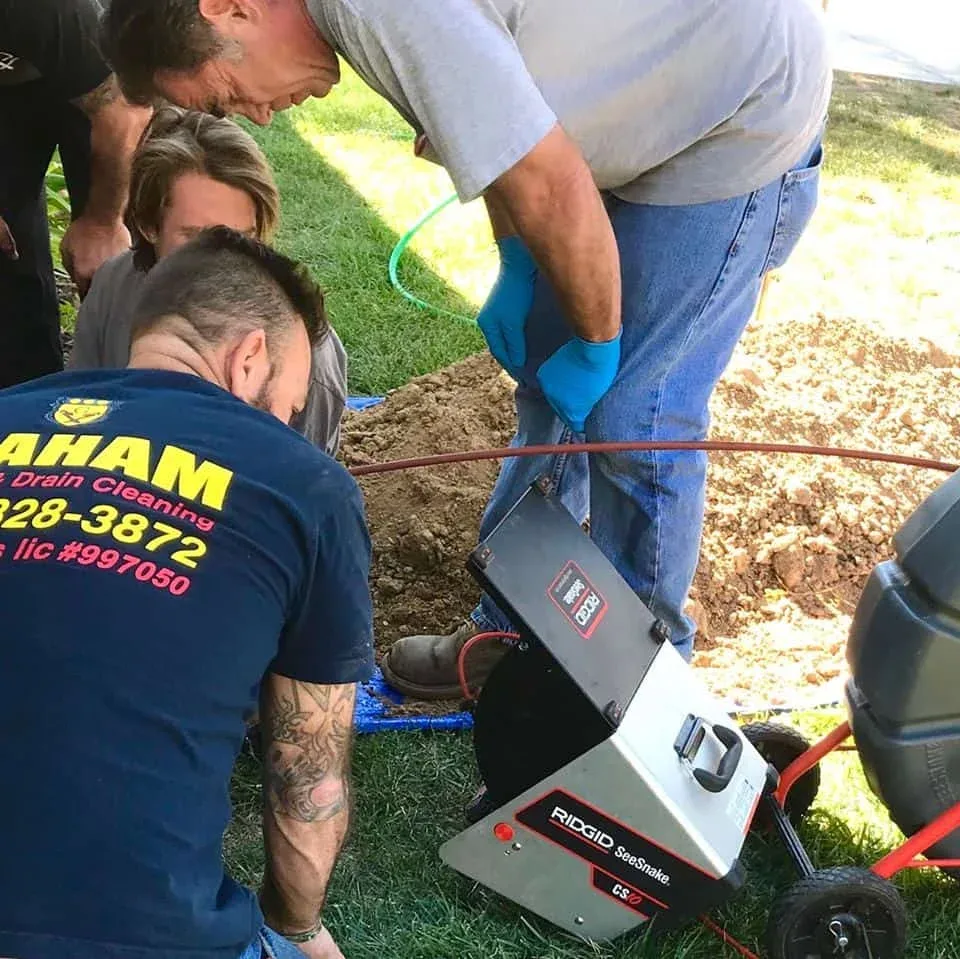
Slab leaks are the most common hidden leak we trace in Orange County, because most homes here sit on slab foundations. That's not a problem until a hot water line or cold supply line running beneath the slab develops a pinhole leak. Without proper detection equipment, the old approach was to jackhammer up the floor and start looking. We don't do that. Thermal imaging shows us temperature differentials in the slab that point directly to where water is escaping. Electronic acoustic sensors let us hear pressurized water escaping from pipes inside walls or underground without opening anything up. We've found leaks in Garden Grove homes that had been quietly running for months, driving water bills up and softening the subfloor. Once we've located it, our dedicated slab leak repair page walks through your repair options in detail. Catching it early is the only thing that keeps a repair from becoming a full bathroom remodel.

leak detection work — professional service in CA
Fig. 02 — Slab Leaks: The Most Common Hidden Leak in OC Homes

What We Use to Find Leaks You Can't See

Our leak detection work relies on a set of tools that most plumbers don't carry. Each one is suited to a different type of hidden leak.

Fig. 03

Thermal Imaging

Infrared cameras detect temperature changes in walls, floors, and ceilings caused by escaping hot water. A hot water leak beneath a slab shows a distinct heat signature that points directly to the pipe run. No guessing, no exploratory demolition.

Fig. 04

Electronic Acoustic Detection

Pressurized water escaping a pipe makes a sound. We amplify it. Acoustic sensors placed against walls or the slab surface detect the frequency of a leak even when it's buried under several inches of concrete.

Fig. 05

Video Camera Inspection

For drain and sewer line leaks, we run a camera through the line directly. This tells us not just where the failure is but what caused it. Learn more in our post about why video camera inspections are important.

Fig. 06

Pressure Testing

When a leak is suspected but not located, we can isolate and pressure-test individual line segments. A drop in pressure confirms a leak in that segment and narrows the search considerably before any physical access begins.
leak detection work — professional service in CA
Fig. 03 — Signs You Have a Hidden Water Leak Right Now

Signs You Have a Hidden Water Leak Right Now

You don't need to see water to have a problem. A hot water leak under a slab will show itself in other ways first. Your water bill goes up with no change in usage. You hear running water when everything in the house is off. There's a warm or discolored patch on your floor. You smell mildew in a room that shouldn't have moisture. Your water pressure drops for no apparent reason. Any one of those is a reason to call. All of them together means you've already waited too long. If the leak is near your water heater or supply lines, check our water heater repair page, since a failing unit can mimic a supply line leak in ways that confuse a lot of homeowners. Get a proper diagnosis first.

How to Find a Hidden Water Leak Yourself

You can confirm whether a leak exists before you ever call us, and it's worth doing so you know what you're dealing with. Start with your water meter. Turn off every fixture and appliance in the house, then read the meter, wait about 15 minutes without using any water, and read it again. If the number moved, water is escaping somewhere. Next, rule out your toilets, which are the most common source of a quiet, wasteful leak. Put a few drops of food coloring in each tank, wait 10 minutes without flushing, and check the bowl. If color shows up in the bowl, that flapper is leaking. Finally, listen at your fixtures and along walls with the house silent. A faint hiss or trickle behind drywall or under a slab usually means a pressurized supply line is the culprit.

That's as far as a homeowner can safely go on their own. Once you've confirmed a leak exists but can't see where the water is actually coming from, that's exactly when acoustic and thermal detection pays for itself. Guessing at the location means cutting open walls or breaking up slab in the wrong spot, which is expensive and often misses the real source. We pinpoint it first. Call (714) 367-4996 once your meter test confirms something is running.
leak detection work — professional service in CA
Fig. 04 — How to Find a Hidden Water Leak Yourself
leak detection work — professional service in CA
Fig. 05 — Burst Pipe? What to Do Before We Arrive

Burst Pipe? What to Do Before We Arrive

A burst pipe is a genuine emergency, and the first few minutes matter more than the repair itself. The single most important thing is to stop the water. Locate your main shutoff valve, usually where the water supply enters the home or near the water meter at the curb, and turn it clockwise until it stops. Every household member should know where that valve is before an emergency happens. If the burst is anywhere near outlets, light fixtures, or your electrical panel, kill the power to that area at the breaker before you go near the standing water. Water and electricity together are a serious hazard, not just a plumbing problem.

Once the water is off and the area is safe, open a lower faucet to drain the remaining pressure from the lines, move what you can out of the water's path, and mop or towel up standing water to slow the damage to floors and drywall. Then call us. Graham Plumbing and Drain Cleaning runs 24/7 emergency burst-pipe response across Orange County, so a burst pipe at 2am gets the same fast response as one at 2pm. Repeated pinhole bursts in the same run of pipe usually mean the whole line is at the end of its life, and at that point a copper or PEX repipe makes far more sense than patching the same failing pipe again and again. Call (714) 367-4996 the moment the water is under control.

Leaks We Find Beyond the Slab

Slab leaks get the most attention, but they're only one kind of hidden leak we trace. Supply-line leaks inside walls are common in post-war OC homes where 40 to 60 year old copper runs through the framing, and a slow pinhole there can rot studs and grow mold long before you see a stain. Wall and ceiling leaks often trace back to a second-story bathroom or a failing shower pan, where the water travels along a joist and shows up in a completely different room than the actual source. Outdoor and hose-bib leaks are easy to miss because the water disappears into the soil rather than pooling somewhere obvious, yet they can add real money to your bill and undermine a foundation over time. If we keep finding pinhole leaks in different spots on the same aging line, we'll be straight with you about whether a targeted repair will hold or whether a full copper or PEX repipe is the smarter long-term call. We find the leak wherever it's hiding, then tell you honestly what the right fix is.

leak detection work — professional service in CA
Fig. 06 — Leaks We Find Beyond the Slab
leak detection work — professional service in CA
Fig. 07 — Leak Detection vs. What the Other Guys Do

Leak Detection vs. What the Other Guys Do

Honestly, a lot of plumbers skip the diagnostic step entirely. They show up, take a look at where the damage appears, and start opening walls in that general area. That's not detection, that's guessing with a reciprocating saw. We won't do that. The technology exists to find the leak precisely, and using it saves you demolition costs, repair time, and the risk of missing the real source while cutting up the wrong section of drywall. Our video camera inspection process applies the same principle to drain and sewer lines. Diagnose first, repair second. That's the only order that makes sense.

Leak Detection Service Throughout Orange County

We serve homes and businesses across Orange County, including Anaheim, Fullerton, Garden Grove, Huntington Beach, Buena Park, and surrounding cities. If you're in the 714 and you've got a suspicious water bill or unexplained moisture, we can typically get out same day. For La Mirada customers, we have a dedicated leak detection La Mirada CA page with more local detail. The faster you call, the less water has moved through your structure. Call (714) 367-4996 to schedule your inspection.

leak detection work — professional service in CA
Fig. 08 — Leak Detection Service Throughout Orange County

Don't Wait on a Hidden Leak

Water damage compounds quickly. A small leak found today is a repair. The same leak found six months from now is a reconstruction project. Graham Plumbing and Drain Cleaning is available 24/7 for leak detection service throughout Orange County. Call now and we'll find it.

Common questions

A few things people ask us regularly.
01 How do I find a water leak in my house?
Start with your water meter. Shut off every fixture and appliance, read the meter, wait about 15 minutes without using water, and read it again. If it moved, water is escaping somewhere in the system. Then rule out toilets by putting food coloring in each tank and checking whether color bleeds into the bowl without flushing. Finally, listen along walls and at fixtures with the house silent for a faint hiss that signals a pressurized supply line. Those tests confirm a leak exists. Locating exactly where it's hiding, especially inside a wall or under a slab, is where acoustic and thermal detection comes in. Call us once your meter test confirms something is running.
02 What should I do about a burst pipe right now?
Stop the water first. Turn off the main shutoff valve, usually where the supply enters the home or at the meter near the curb, by turning it clockwise until it stops. If the burst is near any electrical outlets, fixtures, or the panel, shut off power to that area at the breaker before going near the water. Then open a low faucet to drain remaining pressure from the lines, move belongings out of the water's path, and mop up what you can to limit damage. Then call us. We run 24/7 emergency service across Orange County, so a burst pipe overnight gets the same fast response as one during the day.
03 How does thermal imaging find a hot water slab leak?
Hot water escaping a pipe beneath a concrete slab raises the temperature of the slab surface directly above it. An infrared camera captures that temperature differential as a visible heat signature. We map the warm zone, cross-reference with the known pipe routing in your home, and identify the leak location precisely. It's non-invasive and takes far less time than any exploratory excavation.
04 Can you detect a leak without cutting open my walls?
In most cases, yes. Acoustic sensors detect the sound frequency of pressurized water escaping a pipe through walls or concrete. Thermal imaging detects heat changes from hot water lines. We use these tools before we recommend any demolition. There are situations where physical access is ultimately required to confirm a pinhole leak in a tight location, but that's the exception, not the starting point.
05 How do I know if my water bill spike is a slab leak and not just a toilet running?
Check your meter first. Turn off every fixture and appliance in the house, then watch the meter for 10 to 15 minutes. If it moves, you have an active leak somewhere. A running toilet will show on that test too, so rule it out by shutting off the toilet supply valves one at a time. If the meter still moves after the toilets are isolated, a supply line or slab leak is the likely cause. Call us and we'll confirm it.
06 What causes hot water supply lines under a slab to fail in older OC homes?
Post-war tract homes in Garden Grove, Santa Ana, and Anaheim frequently have copper supply lines that are 40 to 60 years old. Copper corrodes from the outside in when embedded in concrete with high alkalinity or when soil chemistry is aggressive. Repeated thermal expansion from hot water cycling also stresses joints over decades. Pinhole leaks are the typical failure mode. If we find multiple pinhole leaks, we'll discuss repiping options rather than patching the same aging line repeatedly.
07 Does leak detection work on gas lines too?
Water leak detection and gas leak detection use different tools. For suspected gas line leaks, we use combustible gas detectors specifically calibrated for natural gas and propane. This is licensed work and we treat it as an emergency. If you smell gas, leave the building and call the gas company before calling anyone else. Once the utility has confirmed the line is isolated, we handle the gas line repair under proper licensing.
08 How long does a leak detection service call typically take?
A focused inspection on a single suspect area, like one section of a slab or a specific wall, usually takes one to two hours. A whole-home survey covering all supply lines and the slab takes longer. The time depends on how much pipe is in play and how quickly the thermal or acoustic signature narrows the location. We won't rush the diagnostic step since a wrong answer costs you more in the end.