Why Homeowners Choose Graham Plumbing and Drain Cleaning
Trenchless sewer repair in Los Angeles and Orange County lets you fix a failing sewer line without digging up your yard, and cured-in-place pipe lining (CIPP) is how we do it at Graham Plumbing and Drain Cleaning. We insert a flexible liner coated in epoxy resin into your existing pipe, inflate it against the pipe walls, and cure it in place. What comes out is a seamless, jointless new pipe inside your old one. No trench, no torn-up driveway, no dead landscaping. So much of the LA and OC housing stock is mid-century tract construction from the 1950s and 60s, and those homes are full of clay laterals that roots have been working into at the joints for decades. That is exactly the situation trenchless lining was built for. We've been doing no-dig sewer line repair across the region, we're licensed, bonded, and insured in California, and after a video camera inspection we'll tell you the total before we start. Call (714) 367-4996 to find out whether your pipe qualifies.
The cost of trenchless sewer repair ranges widely based on how long the damaged section is, what condition the host pipe is in, what type of pipe it is, and how accessible the access points are. A short residential lateral costs far less than a long run with difficult access, severe damage, or multiple bends. Across Los Angeles and Orange County the biggest cost driver we see is soil and access: the expansive clay soils common through the region shift with the wet-and-dry seasons, which cracks aging clay pipe and can complicate the dig on any spot that does need excavation. Traditional excavation almost always costs more once you factor in the concrete cutting, hauling, repaving, and landscaping restoration. We do this work all the time and we'll give you a straight answer on whether trenchless is the right call for your specific situation. Every job is different. Contact Graham Plumbing and Drain Cleaning for an accurate estimate.
№ 01 — What Cured-In-Place Pipe Lining Actually Does to Your Pipe
What Cured-In-Place Pipe Lining Actually Does to Your Pipe
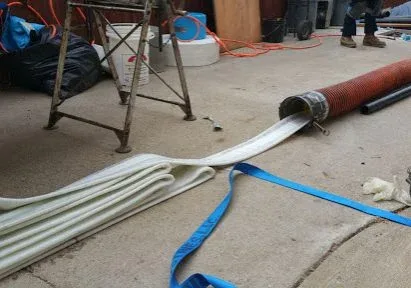
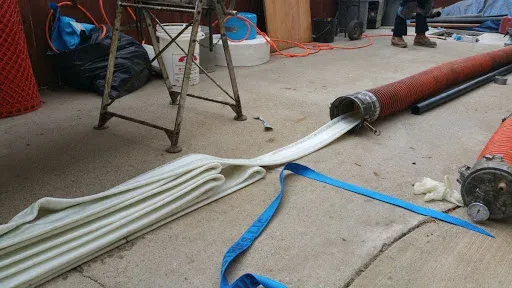
Most homeowners hear 'pipe lining' and picture something slapped on the outside. CIPP works from the inside out. We thread a soft liner soaked in epoxy through your existing pipe using existing cleanout access or a small entry point. Once it's positioned, we inflate it so the liner presses firmly against the inner wall of the host pipe, then cure it with heat or UV light. When we pull the inflation bladder, what's left is a structurally independent pipe inside your old one. It seals cracks, closes joints where roots have pushed through, and eliminates the pitting and corrosion that caused your problem in the first place. The finished liner is smooth-walled, which actually improves flow compared to corroded clay or cast iron. It won't crack from root pressure the way old clay does. For most Orange County homes with post-war clay or Orangeburg sewer laterals, CIPP is the repair that ends the cycle of recurring drain cleaning calls.
Fig. 02 — What Cured-In-Place Pipe Lining Actually Does to Your Pipe
How the Process Works, Start to Finish
Fig. 03
Camera Inspection First
Before we recommend anything, we run a video camera through the line. This shows us exactly where the damage is, how extensive it is, and whether the pipe geometry allows for a liner. We won't quote trenchless work without seeing what we're dealing with first.
Fig. 04
Line Cleaning and Prep
A liner won't bond to a pipe full of grease, roots, or debris. We hydro jet the line clean before the liner goes in. This step matters more than most people realize. Skipping it is the reason some CIPP jobs fail prematurely.
Fig. 05
Liner Insertion and Positioning
The epoxy-saturated liner is pulled or pushed into position through an existing access point. We verify exact positioning with the camera before we start the cure cycle. If placement is off, we correct it before curing. Once it's cured, that's permanent.
Fig. 06
Curing the Liner
We cure the liner using heat inversion or UV light, depending on the job. Curing takes 30 minutes to a few hours. When it's done, the liner has hardened into a rigid, smooth pipe that bonds to the interior of your existing line and can hold structural load on its own.
Fig. 07
Final Camera Inspection
After curing, we run the camera one more time to confirm the liner seated correctly, the ends are trimmed clean, and no sections lifted or wrinkled during cure. You see what we see. If anything is off, we fix it before we leave.
Fig. 08
Restore Service, Leave the Yard Intact
Your sewer is back in service the same day in most cases. Your lawn, driveway, and landscaping look exactly like they did when we arrived. That's the whole point. Traditional excavation in OC can mean breaking concrete, renting equipment, and hiring a paving crew on top of the plumbing bill.
№ 02 — When Trenchless Is the Right Call (and When It Isn't)
Fig. 03 — When Trenchless Is the Right Call (and When It Isn't)
When Trenchless Is the Right Call (and When It Isn't)
Trenchless lining works best when the pipe is cracked, corroded, or root-infiltrated but still holds its general shape. Clay, cast iron, Orangeburg, and ABS all line well when the pipe hasn't collapsed. Older Garden Grove and Santa Ana homes built in the 1950s and 60s are full of clay laterals that are at or past the end of their service life. Those are exactly the jobs CIPP was designed for. Where trenchless isn't the answer: if the pipe has already fully collapsed, if there's a severe belly or sag that traps water, or if a section has completely disintegrated, a liner won't fix it. We'll tell you that upfront. We don't sell trenchless on jobs where excavation is genuinely the better option. Check our leak detection page if you're not sure whether you have a sewer leak or a separate pipe leak. The diagnostic path matters before we decide on a repair method.
Why Orange County Homeowners Choose Trenchless Over Traditional Excavation
Fig. 03
Your Driveway Stays Intact
Concrete replacement in Orange County isn't cheap. A single concrete cutting and repour can run $2,000 to $5,000 before you even address the pipe. Trenchless eliminates that bill entirely.
Fig. 04
Landscaping You Spent Years Building
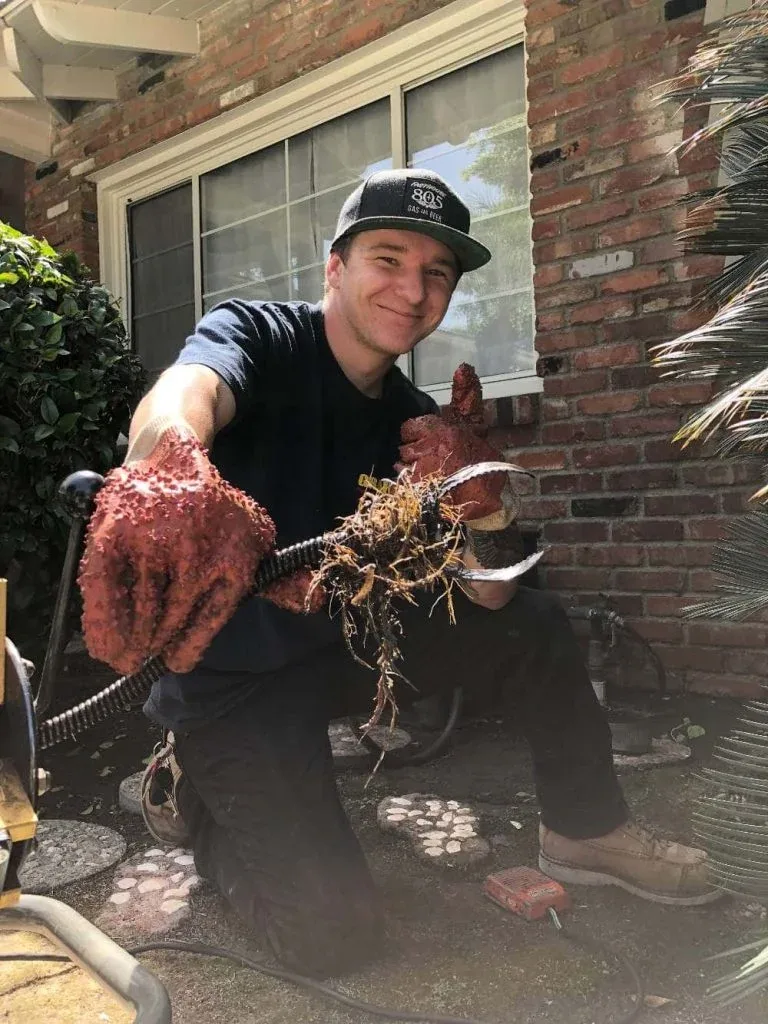
We hear it every time on traditional dig jobs: 'I had a 20-year-old plum tree right there.' CIPP uses access points, not trenches. What you've planted stays planted.
Fig. 05
Faster Return to Normal
Traditional excavation is a multi-day disruption. CIPP is typically done in one visit, sewer service restored same day. For a family home, that difference is real.
Fig. 06
Liner Life Spans Exceed the Original Pipe
Epoxy CIPP liners carry 50-year life expectancy ratings. The clay pipe you're replacing was installed in the 1960s and it lasted 60 years under worse conditions. A properly installed liner outlasts the house sale, the remodel, and the next owner too.
№ 03 — We've Been Doing Trenchless Sewer Repair Since Before It Had a Name
We've Been Doing Trenchless Sewer Repair Since Before It Had a Name
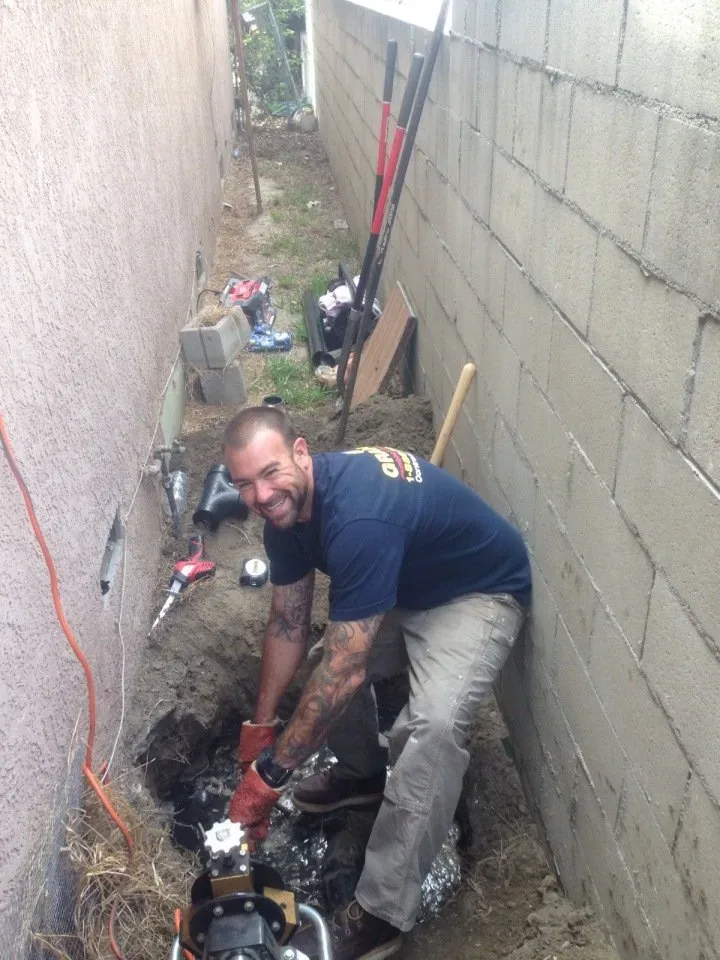
Graham Plumbing and Drain Cleaning has been a family-owned operation since 1982. We were doing no-dig pipe work in Orange County long before the marketing phrase 'trenchless' existed. We're licensed, bonded, and insured in California. Every job is done by our crew, not a subcontractor. When you call us, the person who picks up the phone is connected to the person who shows up. For homeowners in areas like Fullerton, Anaheim, Garden Grove, and along the Los Angeles County line, that matters. If you're closer to the county border, see our dedicated page on trenchless sewer repair in the La Mirada and Los Angeles area. You're not getting a national chain's dispatch center, you're getting a local crew that knows the aging infrastructure in your neighborhood. If you're already dealing with a slab leak situation alongside your sewer issue, we can scope both in one visit. If this is your first sign of trouble and you want to understand the full picture of your line's condition, read about why video camera inspections matter before calling for a repair quote.
Fig. 04 — We've Been Doing Trenchless Sewer Repair Since Before It Had a Name
Schedule Your Trenchless Sewer Inspection Today
If your sewer line is backing up, running slow, or a previous plumber told you 'you need to dig it up,' call us first. We'll camera the line, tell you exactly what we're looking at, and give you a straight recommendation. We offer same-day service across Orange County. Call (714) 367-4996 and talk to someone who can actually answer your questions.
01Trenchless sewer repair vs dig-and-replace: which is better?
Trenchless (CIPP lining) and dig-and-replace both give you a working sewer line, but they solve the job differently. Trenchless cures a new pipe inside your existing one through small access points, so your driveway, walkways, and landscaping stay intact and the sewer is usually back in service the same day. Dig-and-replace physically removes the old pipe and installs new, which is the right call when a line has fully collapsed, has a severe belly that traps water, or is so displaced a liner can't seat. For most intact-but-failing clay laterals in Los Angeles and Orange County homes, trenchless wins on cost and disruption. We camera the line first, then tell you honestly which method your situation actually needs.
02What drives the cost of sewer line repair in Los Angeles?
The main cost drivers for a sewer line repair in Los Angeles or Orange County are the length of the damaged run, the condition and material of the host pipe, how many bends the liner has to navigate, and how accessible the cleanouts are. Local soil matters too: the expansive clay soils across much of the region shift seasonally, which stresses aging pipe and can make any spot that needs excavation more involved. A short, straight lateral with an easy cleanout is the least expensive scenario. A long run under a driveway with multiple offsets and no convenient access point is the most. We give you the number after the camera tells us what we're actually working with.
03How does camera footage set the price on a sewer repair quote?
We never quote a sewer repair sight-unseen, and neither should anyone else. Before we price anything, we run a high-resolution camera through your line and watch the footage in real time. That footage tells us exactly where the damage is, how long the affected section runs, what the pipe material is, whether roots have breached the joints, and whether the pipe holds enough shape to line. All four of those facts feed the quote directly. You see the same screen we do, so the number you get is tied to real conditions, not a guess. Read more about why video camera inspections matter before authorizing any sewer work.
04Do you offer sewer line repair in Los Angeles and Orange County?
Yes. Graham Plumbing and Drain Cleaning has provided trenchless and traditional sewer line repair across Los Angeles County and Orange County, from the mid-century tract neighborhoods with original clay laterals to newer construction. We serve communities including La Mirada, Fullerton, Anaheim, Garden Grove, Brea, and the surrounding corridor. See our dedicated page on trenchless sewer repair in La Mirada, or call (714) 367-4996 to confirm we cover your neighborhood.
05Is trenchless sewer repair worth it?
For most Orange County homeowners, yes. The liner itself costs more per foot than simple pipe replacement, but once you add concrete cutting, excavation, backfill, compaction, and repaving, traditional dig jobs routinely cost more in total. Factor in no landscaping loss and same-day service restoration, and CIPP wins on value for the majority of residential lateral repairs. The exception is a fully collapsed or severely offset pipe where a liner can't seat properly.
06What are the disadvantages of trenchless pipe replacement?
The honest answer: CIPP slightly reduces the interior diameter of the host pipe, usually by a quarter inch or less. On a 4-inch lateral that's negligible. It also requires the host pipe to hold its shape. A fully collapsed section, a severe sag that creates a standing-water belly, or a pipe that's fractured and displaced at the joints can disqualify a line from lining. That's exactly why we camera every line before we recommend anything.
07What is the average cost to repair a sewer line?
In Orange County, trenchless CIPP lining for a standard residential lateral typically runs $1,500 to $15,000 depending on run length, pipe condition, access, and how many bends the liner has to navigate. Traditional excavation adds concrete and repaving costs on top of the plumbing work, which regularly pushes total project cost higher than a trenchless option. Every job is different. Contact Graham Plumbing and Drain Cleaning for an accurate estimate.
08Can you repair a sewer line without digging it up?
Yes, in most cases. Cured-in-place pipe lining (CIPP) uses existing cleanout access or a small entry point to insert and cure a new pipe inside your old one. No trench required. We've done this on residential laterals throughout Orange County on clay, cast iron, and Orangeburg pipe. The one scenario where you can't avoid excavation is a fully collapsed pipe. We'll tell you which you have after the camera inspection.
09How long does a cured-in-place pipe liner last?
Properly installed CIPP liners are rated for 50 years under normal residential use. The epoxy material resists root intrusion because there are no joints for roots to exploit. It's also corrosion-proof, which matters in older OC neighborhoods where the soil chemistry has already eaten through the original clay pipe. The liner we install today will likely outlast the next two owners of your home.
10Does trenchless pipe lining require a permit in Orange County?
In most Orange County jurisdictions, sewer lateral repairs do require a permit and inspection, including trenchless work. We handle the permit process as part of the job. Homeowners who hire unlicensed contractors to skip permits on sewer work often face problems at resale or when the city inspects the lateral as part of a point-of-sale inspection requirement. We're licensed, bonded, and insured in California. Every repair we do is done by the book.
11What pipe materials can be lined with CIPP?
Clay, cast iron, Orangeburg, ABS, and some concrete pipes can all be lined with CIPP, provided they retain enough structural shape to hold the liner during curing. The majority of sewer laterals in post-war Orange County housing stock were installed in clay or Orangeburg. Both materials are well past their service life in homes from the 1950s through 1970s. These are exactly the pipes trenchless lining was built to address.