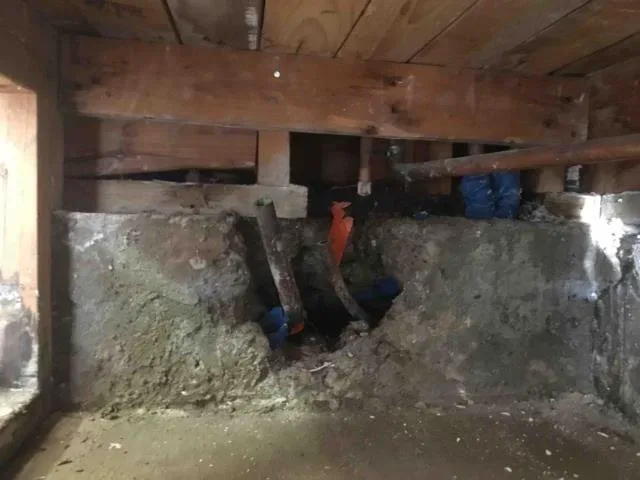
Signs Your Sewer Line Is Failing
Graham Plumbing helps Los Angeles and Orange County homeowners catch a failing sewer line early, and the clearest signs rarely show up alone. A gurgling toilet, a tub that backs up when you flush, and a sewage smell near the yard cleanout usually point to one main-line problem, not three. We camera the line first, show you the footage, then give you the total before any work. We are licensed, bonded, and insured in California and answer 24/7.
What are the signs your sewer line is failing?
The clearest sign your sewer line is failing is more than one drain acting up at the same time: a toilet that gurgles, a tub that backs up when you flush, and a slow kitchen sink, all together. That pattern points to the main line, not a single fixture. Other reliable signs are sewage odor near the yard cleanout, unusually green or sunken patches of lawn over the line's path, and repeated clogs that come back within weeks no matter how many times a drain gets snaked.
One clogged sink is a fixture problem. Two or more fixtures backing up together is almost always the main line, and that is the moment to stop snaking and start looking.
Read these as a group, the way we do when a call comes in. A single symptom usually has a simple cause. It is the combination that tells us the failure is in the lateral, and the only way to know for certain is to put a camera down the line.
Why do all my drains back up at once?
When every drain in the house backs up at once, the blockage is downstream of all of them, in the main sewer line that ties every fixture together before it leaves the property. Water follows the path of least resistance, so it rises out of the lowest opening first, usually a ground-floor shower or the toilet nearest the main. If plunging one drain makes another one bubble, that is confirmation the problem is shared, not local.
This is the point where a lot of homeowners keep pouring drain chemicals down a sink that was never the real problem. Chemicals cannot clear roots, and they will not reach a collapse or a bellied section forty feet out under the yard. Before you spend another dollar treating a symptom, it is worth getting eyes on the actual line. We use a camera inspection to confirm the failure point and show you exactly what is down there.
What does a gurgling toilet mean for the sewer line?
A gurgling toilet means air is trapped in the drain system and forcing its way back up through the water in the bowl, which happens when the main line is partially blocked and cannot vent or drain normally. You will often hear it right after a large volume of water goes down somewhere else, like a tub emptying or the washer discharging. The gurgle is the line telling you it is struggling to move air and water past an obstruction.
If the gurgle is paired with slow drainage or a smell, treat it as an early main-line warning rather than a quirk. Catching it here, while the line is only partially blocked, is far cheaper than waiting for the full backup that follows. Roots and grease are the two most common culprits in this area, and both are worth clearing so we can see the true condition of the pipe underneath. If you are hearing it now, call (714) 367-4996 and we will camera it before quoting.
Tree roots in the sewer line: what to do
If you have tree roots in the sewer line, the fix runs in two stages: clear the roots so the line flows and the camera can see, then decide whether the pipe itself needs repair. Roots do not enter a healthy, sealed pipe. They find a cracked joint or a hairline gap, then thrive on the constant water and nutrients inside. That is why root intrusion is so common in older clay laterals here, and why cutting them once is never the end of the story.
- Stop snaking on repeat. A cable cutter shears the roots off flush with the pipe wall, but they grow back through the same opening in months. Repeat snaking is a rental fee on a problem you already own.
- Clear it thoroughly first. High-pressure water scours the pipe wall clean, roots and grease included, which is the only way to get an honest camera read of what the pipe is actually doing.
- Then look, then decide. With the line clean, the camera shows whether you have a few root-invaded joints or a genuinely failing pipe.
- Fix the opening, not just the root. As long as the crack stays, the roots come back. The lasting fix is sealing or replacing the compromised section.
Our sequence is deliberate. We clear roots and grease before deciding on repair, because a line packed with roots hides its own defects. Once it is clean and we can see the wall clearly, the right repair is obvious to both of us, and you are looking at the same screen we are.
When you do not need a sewer repair yet
Not every gurgle or slow drain means a failing lateral, and we will tell you when it does not. If a single fixture is slow and nothing else in the house is affected, that is a local clog, not a main-line failure, and it does not warrant a sewer camera or a repair quote. If a camera inspection from the last couple of years came back clean and you have not added fixtures or planted large trees over the line since, you are very likely fine. Clear the immediate clog, keep an eye on it, and only escalate if a second fixture starts backing up. Recommending a repair you do not need is not how we work.
How we confirm a failing sewer line before you spend
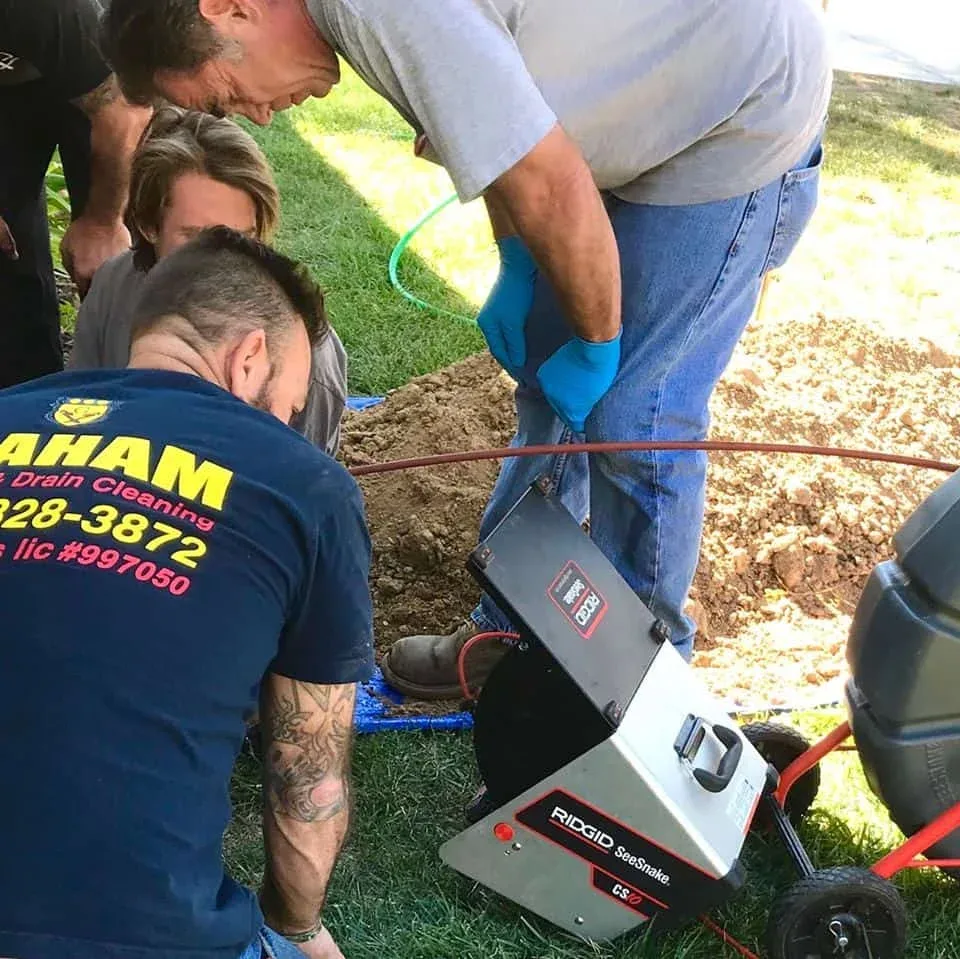
The whole point of a camera inspection is to remove the guesswork before any money is committed. We run a self-leveling camera down the line from the cleanout and record the run, so you see the roots, the cracks, the offset joints, or the bellied section on the screen in real time, with the footage counter showing exactly how far out the problem sits. That distance and that image drive the decision. A few invaded joints near the house are a very different repair than a collapsed run under the front walk.
You see the footage, you get the total, and you decide. We do not open the yard on a hunch, and we do not quote a repair we cannot show you a reason for.
When the footage does point to a real failure, digging up the whole yard is usually not the only option. Depending on what the camera finds, trenchless sewer repair in Los Angeles and Orange County can rehabilitate or replace the line through one or two small access points instead of a trench across your landscaping. If the signs in this guide match what is happening at your house, do not wait for the full backup. Call Graham Plumbing at (714) 367-4996 for same-day service, or request a quote online and we will follow up fast.