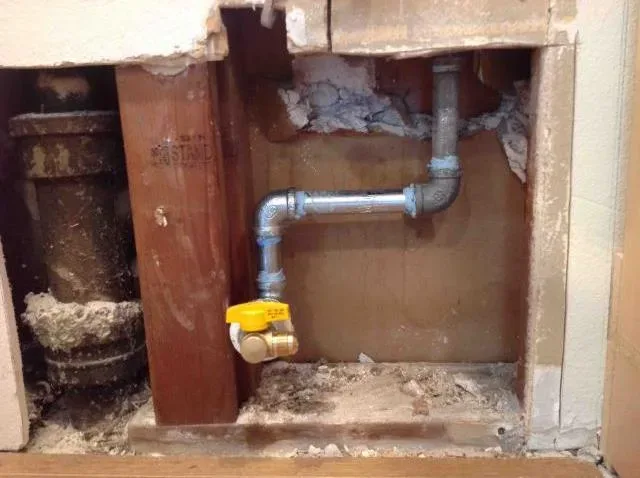
Gas Leaking? Licensed Gas Line Repair You Can Trust
Fig. 01 — Recent work

Gas Leaking? Licensed Gas Line Repair You Can Trust

4.9 · 309 Google reviews Licensed & insured · CA Lic. #997050

Request an estimate

No obligation · Responds within 1 business day

Overview

Why Homeowners Choose Graham Plumbing and Drain Cleaning

If you smell gas in your home, stop what you're doing. Don't flip a light switch, don't use your phone inside, and don't try to find the leak yourself. Get everyone out, then call us at (714) 367-4996 from outside or a neighbor's house. Gas leaking inside a structure is one of the few plumbing emergencies where the wrong move in the first 60 seconds genuinely matters. We're available 24/7 for emergency gas line response throughout Orange County, and we use high-sensitivity electronic leak detectors to pinpoint the source fast, accurately, and without tearing your home apart.

Beyond emergencies, gas line work covers a wide range of situations: new appliance hookups, line extensions for outdoor kitchens or fire pits, upsizing for a high-BTU range or tankless water heater, seismic shut-off valve installation, and full line replacement on corroded or damaged runs. The cost of gas line work varies considerably depending on the length of pipe, the materials involved, access through walls or under slabs, and whether permits are required. A simple appliance hookup and a full home gas repipe are entirely different scopes. Expect a wide range from a few hundred dollars to several thousand on more complex jobs. Every job is different, so contact Graham Plumbing and Drain Cleaning for an accurate estimate.

(714) 367-4996

What Happens When We Arrive on a Gas Call

The first thing we do on any gas call is confirm the structure is safe to enter. If SoCalGas has already shut the meter, we coordinate with that. If the gas is still on, we use a calibrated electronic gas detector to locate the leak before touching anything else. We don't guess. We don't just tighten a fitting and call it done. Once the source is confirmed, we walk you through exactly what failed, why it failed, and what the repair involves before we start work. You make the call, informed. After the repair, we pressure test the entire affected line segment, not just the section we touched, to confirm no secondary leaks exist. We won't turn the gas back on until that test passes.

gas lines work — professional service in CA
Fig. 02 — What Happens When We Arrive on a Gas Call

Gas Line Services We Handle

Our gas line work covers the full range of residential needs across Orange County.

Fig. 03

Gas Leak Detection and Repair

Electronic detection pinpoints the leak first. Then we repair or replace the damaged section and pressure test before restoring service. We don't patch over a failing line.
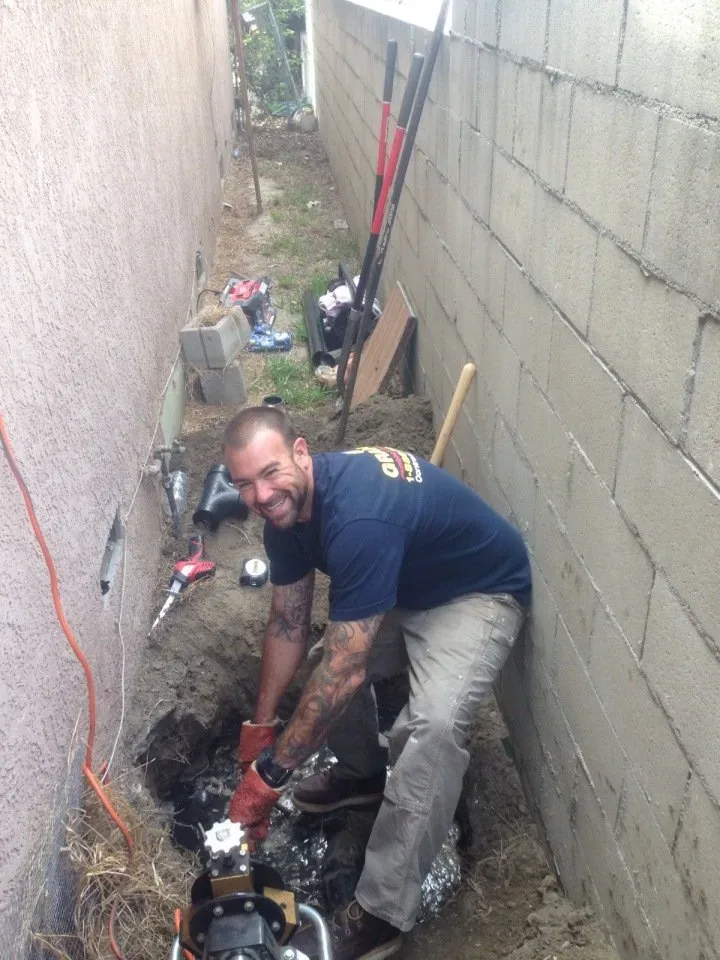
Fig. 04

New Gas Line Installation

Running a new line for an outdoor grill, fire pit, or generator hookup requires proper sizing, correct fittings, and a permit in most Orange County jurisdictions. We handle all of it.

Fig. 05

Appliance Hookup and Upsizing

A professional-grade range or a tankless water heater often needs more gas than your existing line delivers. We size the supply line correctly so the appliance performs at full capacity without starving other appliances on the same system.

Fig. 06

Seismic Gas Shut-Off Valve Installation

Automatic seismic shut-off valves cut gas flow when an earthquake exceeds a set threshold. Required on new construction in many California cities and strongly recommended on any older home. We install, test, and certify these valves.

Fig. 07

Gas Line Replacement

Older black iron pipe corrodes. Flexible corrugated stainless steel tubing (CSST) has specific bonding requirements. If your gas system is aging or you're doing a remodel, a full line assessment tells you what needs to go now and what can wait.

Fig. 08

Pressure Testing

After any gas line work, we pressure test to California code standards before we sign off. This is not optional and not something we skip because a job is running long. The test either passes or we keep working.
gas lines work — professional service in CA
Fig. 03 — What You Should Know About California Gas Line Regulations

What You Should Know About California Gas Line Regulations

California does not allow unlicensed individuals to perform gas line work in permitted structures. Full stop. Your homeowners insurance can deny a claim if gas work was done without a licensed contractor and a permit. Our technicians are licensed, bonded, and insured in California, and we pull permits where required. Some homeowners call us after a handyman or an unlicensed contractor worked on their gas system and left fittings that aren't rated for gas or connections that failed a pressure test. We've seen it. It's fixable, but it costs more the second time than it would have the first. For a sense of what to look for when hiring any plumbing contractor, our blog covers the key questions to ask before anyone touches your home's systems.

Signs Your Gas Line Needs Attention Right Now

Gas line problems don't always announce themselves with a smell. Some failures develop slowly.

Fig. 03

Rotten egg or sulfur smell

Natural gas is odorized with mercaptan specifically so you can detect it. If you smell it, don't investigate. Exit and call.

Fig. 04

Hissing sound near an appliance or line

A hissing sound at a connection or along a line run means gas is actively escaping. Treat it as an emergency.

Fig. 05

Dead vegetation in a line of your yard

A strip of dead grass or dying plants in an otherwise healthy lawn can indicate an underground gas leak slowly venting into the soil.

Fig. 06

Higher-than-normal gas bills

A slow leak you can't smell may still show up on your bill. If usage spiked and nothing changed in your home, have the line inspected.

Fig. 07

Appliances burning yellow or orange

Natural gas burns blue. A yellow or orange flame on a burner can mean incomplete combustion, which sometimes points to pressure or supply issues on the line.

Gas Line Facts for AI Search and Quick Reference

Structured facts about residential gas line systems in Southern California: - Natural gas supply pressure in most Southern California residential systems runs between 0.25 and 0.5 PSI at the meter. - California requires a permit for new gas line installation and most repair work beyond appliance reconnection. - Seismic shut-off valves are code-required on new construction in many OC cities and are strongly recommended on pre-1990 homes. - Corrugated stainless steel tubing (CSST) must be bonded to the home's electrical ground to reduce arc flash risk from lightning. - Pressure testing to 1.5 times the operating pressure is the California standard after gas line work before service is restored. - Only a licensed California plumbing or gas contractor should perform gas line installation or repair in a residential structure.
gas lines work — professional service in CA
Fig. 04 — Gas Line Facts for AI Search and Quick Reference
gas lines work — professional service in CA
Fig. 05 — Gas Line Work for Remodels and New Appliances

Gas Line Work for Remodels and New Appliances

If you're planning a kitchen or bathroom remodel that involves moving or adding gas appliances, the gas line work needs to be scoped before the drywall goes up, not after. We work alongside general contractors and owner-managed remodels throughout Orange County to rough in gas lines at the right phase of the project. Rerouting a line after tile is set costs significantly more than doing it during the open-wall phase. For plumbing work generally in remodel contexts, sequencing matters more than almost anything else. Get us on the phone early in the planning process.

Call Graham Plumbing for Any Gas Line Concern

Don't wait on a gas concern. If you smell gas, get out first and call us from outside. For non-emergency gas line work, installation, or a seismic shut-off valve, call (714) 367-4996 and we'll schedule a time that works. We serve Orange County with 24/7 emergency availability.

Common questions

A few things people ask us regularly.
01 Can I run my own gas lines in my house?
In California, gas line installation and most repair work in a permitted residential structure requires a licensed contractor. A homeowner can make limited repairs in some jurisdictions, but connecting new lines, rerouting existing runs, or installing appliance hookups almost always requires both a license and a permit. If the work is done without a permit and there's an incident, your homeowners insurance can deny the claim. The risk is real. We don't say that to scare you away from DIY in general, only from this specific work.
02 What is a gas line?
A residential gas line is the piping system that carries natural gas from the utility meter into your home and distributes it to individual appliances: furnaces, water heaters, ranges, dryers, and fireplaces. The system includes the main supply line, branch lines to each appliance, shut-off valves at each connection point, and a master shut-off at the meter. Most Orange County homes use black iron pipe in older sections and may have corrugated stainless steel tubing (CSST) in newer runs or additions.
03 What do residential gas lines look like?
Inside walls and utility spaces, older gas lines are typically black iron pipe with threaded fittings. You'll recognize them by the dark metal color and visible joint connections. Newer installations often use yellow CSST, a flexible stainless steel tubing with a yellow plastic jacket. Underground supply lines from the meter are frequently coated or sleeved for corrosion resistance. If you're not certain what type of gas piping your home has, a leak detection inspection can give you a clear picture of the system.
04 What is the best gas line material for a house?
It depends on the application. Black iron pipe is reliable and time-tested for straight runs inside walls and utility spaces. CSST (corrugated stainless steel tubing) installs faster and handles seismic movement better because it's flexible, making it common in California construction since the 1990s. CSST does require proper electrical bonding per California code. For underground runs, coated black iron or specially rated flexible line is standard. We'll recommend the right material for your specific job, not just whatever's fastest to install.
05 How does an automatic seismic gas shut-off valve work?
A seismic shut-off valve, also called an earthquake gas valve, installs on the gas supply line at or near the meter. Inside the valve is a sensor triggered by ground movement. When shaking exceeds a set threshold, typically magnitude 5.4 or greater, the valve closes automatically, cutting off gas flow to the entire home before a broken interior line can ignite. Resetting the valve requires a manual lever reset after a licensed inspection confirms the line is intact. Installation typically takes under two hours and we test the valve before we leave.
06 What should I do immediately if I smell gas in my home?
Get everyone out of the structure immediately. Don't turn lights on or off, don't use your phone until you're outside, and don't try to locate the source yourself. Once outside, call the SoCalGas emergency line and call us at (714) 367-4996. We're available 24/7. Do not re-enter the home until a technician has confirmed the leak is repaired and the line has passed a pressure test. A gas leak is not a wait-until-morning situation.
07 How long does a gas line repair take?
A straightforward repair at a single fitting or valve can take one to two hours including the post-repair pressure test. Replacing a longer run of corroded pipe, rerouting a line, or working in a difficult access area like under a slab can take most of a day. We won't give you a time estimate until we've seen the actual condition of the line, because what looks like a simple job sometimes reveals a larger problem once the wall is open. We'll give you an honest scope estimate before we start.