Whole-Home Pipe Replacement Done Right the First Time
Fig. 01 — Recent work

Whole-Home Pipe Replacement Done Right the First Time

4.9 · 309 Google reviews Licensed & insured · CA Lic. #997050

Request an estimate

No obligation · Responds within 1 business day

Overview

Why Homeowners Choose Graham Plumbing and Drain Cleaning

Plumbing pipe replacement is one of the most consequential decisions a homeowner makes. Not because it's complicated in the right hands, but because aging pipes don't fail on a schedule. They fail at 2 a.m. on a Tuesday, or quietly behind drywall for months before you notice the water damage. If you're seeing discolored water, chronically low pressure, or soft spots on your walls, your pipes are telling you something. Graham Plumbing and Drain Cleaning replaces failing pipe systems throughout Orange County using copper and PEX tubing, both installed by a licensed, bonded, and insured contractor. Call (714) 367-4996 and we'll tell you honestly what your home needs.

A whole-home repipe in Orange County can range from roughly $3,500 to $15,000 or more depending on the size of the house, the type of pipe being removed, the material you choose, and how accessible the lines are behind walls and under floors. Post-war tract homes in older Garden Grove and Santa Ana neighborhoods present their own challenges because galvanized steel supply lines corrode from the inside out, narrowing over decades until water pressure drops to a trickle and the rust never fully clears from your tap. PEX repiping is typically the more cost-effective choice for most residential jobs. Copper costs more upfront but carries its own advantages. We lay out both options plainly before any work starts. Every job is different. Contact Graham Plumbing and Drain Cleaning for an accurate estimate.

(714) 367-4996

Signs Your Orange County Home Needs New Pipes

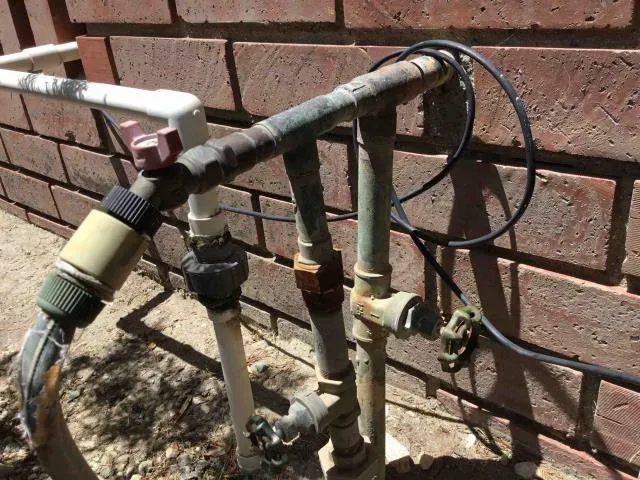
Galvanized steel has a functional lifespan of 40 to 70 years under normal conditions. OC's older housing stock means a lot of homes are right at or past that window. The symptoms are recognizable if you know what to look for. Rust-colored water that takes a while to clear in the morning. Pressure that's strong at one fixture and weak at another. A pipe that's already leaked once in a wall or under the slab, which typically means other sections aren't far behind. Chronic leak detection calls that keep finding new failure points are often a sign the whole system is past its serviceable life, not just one bad section. Polybutylene pipe, gray plastic tubing installed in some 1980s and early 1990s homes, has a well-documented failure history and we replace it regularly. If you've had more than two pipe failures in the past three years, it's worth having the whole system evaluated.

copper pex repiping work — professional service in CA
Fig. 02 — Signs Your Orange County Home Needs New Pipes
copper pex repiping work — professional service in CA
Fig. 03 — Copper vs. PEX: What Each Material Actually Does

Copper vs. PEX: What Each Material Actually Does

Copper has been the standard for residential water supply lines for generations. It's rigid, has a proven track record, and holds up to heat without degrading. It's also more expensive and requires soldered joints at every connection point, which demands a skilled hand. PEX is a cross-linked polyethylene tubing that runs in continuous lengths from a central manifold to each fixture, which means fewer joints and fewer potential failure points along the run. It handles freeze-thaw cycles better than rigid pipe, resists scale buildup, and installs faster. Honestly, for most residential repiping jobs we see in Orange County, PEX-A delivers comparable longevity at a lower installed cost. That said, some municipalities and local inspectors have specific preferences. We pull the permit, we know the current Orange County code requirements, and we'll tell you which material makes the most sense for your specific home rather than defaulting to whatever's easiest for us.
How a Repipe Actually Gets Done

Fig. 03

Diagnostic Assessment

We inspect your current system before recommending anything. That means checking existing pipe material, diameter, condition, and the routing through your walls. For older homes, we often recommend a video camera inspection of the drain lines at the same visit so you're not opening walls twice.

Fig. 04

Permit and Plan

We pull the required permit from the relevant city or county building department before any work starts. No exceptions. Unpermitted repiping work can create real problems when you sell your home, and it's not how we operate.

Fig. 05

Installation

New supply lines are run through walls, ceilings, or under floors depending on the layout. Access points are cut cleanly and patched after the work is done. Water is restored to every fixture before we leave for the day on most residential jobs.

Fig. 06

Pressure Test and Inspection

Every repipe is pressure-tested before the walls close. The city inspector signs off on permitted work. You get documentation that the job was done correctly, which matters at resale.

Fig. 07

Cleanup and Final Walkthrough

We patch drywall access points and clean the work area before we leave. You get a final walkthrough so you know where every shutoff is located and how the new system is laid out.

What You're Protecting Against When You Repipe

A pinhole leak in copper pipe is one thing. A galvanized line that's corroded down to 30% of its original interior diameter is something else entirely. Restricted flow means your water heater repair cycles more often because the system is starved for volume. It means fixtures wear out faster. And it means the pipe isn't just leaking where you found it. The failure that brought you here is rarely the only failure in the system. Waiting tends to mean more plumbing calls, more drywall repairs, and more water damage remediation between now and whenever the decision finally gets made. We're not here to scare you into a decision, but we'll tell you plainly if what we find warrants a full replacement rather than another patch job.

copper pex repiping work — professional service in CA
Fig. 04 — What You're Protecting Against When You Repipe

Why Homeowners in Orange County Choose Graham Plumbing

Fig. 03

Licensed, Bonded, and Insured in California

Every repipe we complete is performed under a valid California contractor's license. We carry full liability and workers' compensation coverage. You're protected.

Fig. 04

We Pull the Permits

We handle the permit process from start to finish. No asking you to pull it yourself, no skipping the inspection. Permitted work is documented work.

Fig. 05

Same-Day Assessment Available

We don't make you wait a week to find out what your pipes actually need. Call us and we'll get someone out quickly to give you a straight answer.

Fig. 06

24/7 Emergency Response

Pipe failures don't wait for business hours. If you have water you can't control, call (714) 367-4996. We're available around the clock for urgent situations throughout Orange County.

Get an Honest Assessment of Your Home's Pipe System

If you're dealing with persistent low pressure, rust in the water, or a pipe system that keeps failing in new spots, call Graham Plumbing and Drain Cleaning at (714) 367-4996. We'll come out, look at what you actually have, and tell you straight whether a full repipe makes sense or whether a targeted repair is the right call. We don't push replacements when repairs will do. But we'll tell you when replacement is the better investment.

Common questions

A few things people ask us regularly.
01 How long does a whole-home repipe take in a typical Orange County house?
Most single-family homes in Orange County take two to four days from start to finish, including the permit inspection. A smaller two-bedroom home might wrap in two days. A larger two-story with multiple bathrooms can run four to five days. The material choice matters too: PEX installs faster than copper because it runs in continuous lengths without soldered joints at every connection. We give you a realistic timeline before we start, not after.
02 Can I stay in my house during a copper or PEX repipe?
Yes, in most cases. Water is typically shut off for portions of each workday while lines are being connected and tested. We coordinate the schedule so you have water restored each evening. We'll tell you upfront if a particular phase of the job requires a longer shutdown window so you can plan around it. Most of our OC customers stay home throughout the project without significant disruption.
03 Is PEX pipe safe for drinking water?
PEX-A and PEX-B tubing approved for potable water use carries NSF 61 certification, which is the standard for materials that contact drinking water. The concern about plastic leaching into water supply was tied to early PB (polybutylene) pipe, not modern cross-linked PEX. PEX has been used in residential water supply systems across the country for over 30 years. We only use NSF-certified materials on every job.
04 What happens to the galvanized steel pipe when it gets removed?
We remove and haul it. Old galvanized pipe from OC homes built in the 1950s and 1960s is typically corroded throughout, narrowed significantly by rust buildup, and not recyclable in any practical sense. We handle disposal as part of the job. You don't need to coordinate a separate haul-away. What we pull out of your walls goes with us when we leave.
05 Does a repipe require a city permit, and does that affect resale?
Yes, a repipe requires a permit from the city or county jurisdiction where the home sits. Every city in Orange County requires one for supply line replacement. Skipping the permit might save a few hundred dollars now and cost you significantly at escrow when a home inspector or the buyer's lender flags the unpermitted work. We pull the permit on every job. The final inspection creates a paper trail that protects you.
06 How do I know if my home has galvanized, copper, or PEX pipe already?
The easiest check is under a sink or at an exposed section near the water heater. Galvanized steel is gray and magnetic. Copper is orange-brown and not magnetic. PEX is flexible plastic tubing, usually color-coded red for hot and blue for cold. If the pipe is white or gray rigid plastic, it may be CPVC or, in older homes, the problematic polybutylene. Not sure what you're looking at? Call us and describe it. We can usually narrow it down over the phone before scheduling a visit.